You show up, do the work, and send an invoice. The client says the color looks wrong, or the driveway cracked two weeks later, or they just stop returning calls. Without a signed sealcoating contract, you have almost nothing to stand on.
A contract is not paperwork for paperwork's sake. It tells the client exactly what they're getting, sets the rules if something goes sideways, and gets your money moving faster. Contractors who use one consistently get fewer disputes and fewer slow payments. The ones who skip it end up eating costs they never planned for.
Here's what belongs in a sealcoating contract, why each piece matters, and how to get it signed without slowing down the sale.
Why a Signed Contract Matters More Than a Handshake
Most sealcoating disputes come down to a memory problem. You remember quoting two coats on the parking lot only. The client remembers you promising to do the curb stops too. Without a written agreement, both of you are right from your own perspective, and one of you ends up working for free.
A signed contract fixes that. It converts a verbal understanding into a document both parties agreed to at a specific point in time. If a client withholds payment, disputes the scope, or makes a warranty claim six months later, the contract is what you point to. Courts and collections agencies treat it the same way.
The best time to set expectations with a client is before the crew shows up, not after the invoice is late.
There's also a professionalism signal. Clients who receive a clean, detailed contract before work starts take you more seriously. It separates you from the guy with a spray tank and a phone number on a pickup truck. That perception difference affects whether they sign fast, haggle on price, or call you back next season.
The Core Sections Every Sealcoating Contract Needs
Every contract is different depending on job size and client type, but these sections belong in almost every agreement you send.
Parties and Contact Information
Name your company and the client clearly at the top. Include your business address, phone, and email, plus the same for the client. If the client is a property management company or HOA, name both the organization and the individual you're dealing with. Ambiguity about who signed the contract can void it entirely.
Scope of Work
This is the most important section. Write out exactly what you will do: the surface area in square feet, number of coats, product being applied, surface preparation steps (crack filling, cleaning, edging), and any areas explicitly excluded. If you're not doing the handicap spaces, say so. If cracked asphalt beyond a certain width is out of scope, write that down.
Vague scope creates scope creep. Scope creep kills your margin. Be specific here even if it adds a few lines to the contract, because those lines protect you when a client points at a section you never quoted and says "I thought that was included."
Pricing and Payment Terms
State the total contract price, your deposit requirement, and when the balance is due. Most sealcoating contractors collect 30 to 50 percent upfront, with the remainder due on completion or within a set number of days after. Spell out accepted payment methods and what happens if payment is late, including any interest or collection fees you'll charge.
If you're pricing by the square foot, include the rate and the measured area so the math is visible. Clients who can see how the number was built are less likely to challenge it. For a detailed look at how to set those rates, the 2025 paving contractor pricing guide covers current market rates and cost variables worth factoring in.
Scheduling and Weather Conditions
Sealcoating is weather-dependent. Your contract needs to say that. Include your minimum temperature requirements (typically 50°F and rising), your maximum wind speed tolerance, and how rain delays are handled. State that you reserve the right to reschedule without penalty if conditions fall outside your application standards.
Clients outside the paving business genuinely do not know that sealcoat applied in cold or wet weather fails faster. Putting it in writing protects you from the client who calls back in the spring to say the job looks bad and demands a redo at no charge.
Surface Preparation and Client Responsibilities
Describe what you will do to prep the surface and what the client must do before you arrive. Typical client responsibilities include clearing vehicles, removing debris, and keeping foot traffic off the area for a stated curing period. If the pavement has pre-existing damage that will affect results, note it and have the client acknowledge it.
This section prevents the most common after-the-fact complaint: the client who says the job looks rough and doesn't mention they left a car on the fresh sealcoat for three hours.
Warranty and Exclusions
Be direct about what you're warrantying and for how long. A typical sealcoating warranty covers application defects for one to two years but excludes normal wear, damage from improper use, standing water, or pre-existing pavement failures. Write it plainly. If you're not warrantying anything, say that too.
Never leave this section blank hoping the client won't ask. They will ask at the worst possible time.
Liability and Damage Limitations
Limit your liability to the contract value. If your crew nicks a curb or an overspray hits a car, you want a ceiling on what you owe, not open-ended exposure. State that you carry general liability insurance and list your coverage amount. If a client's property has buried irrigation lines or invisible hazards, get a written acknowledgment from them before you start work.
Dispute Resolution
Include a clause that says disputes will be handled in your jurisdiction and through a specific process, whether that's mediation first or direct litigation. This discourages frivolous complaints and gives both parties a clear path if something genuinely goes wrong.
Residential vs. Commercial Sealcoating Contracts
The core sections above apply to both residential and commercial jobs, but the emphasis shifts depending on who you're working for.
Residential
Shorter contracts work fine. Homeowners want to know the price, when you'll show up, how long to stay off the driveway, and what happens if it rains. Keep the language plain. Focus your detail on scope and payment terms. A one-page agreement is normal and easy to get signed on the spot.
Commercial
Property managers and facility directors expect more. Include exact square footage, product spec sheets if applicable, insurance certificates, and a clear schedule with milestones. Commercial clients often have their own contract templates, so be ready to review theirs or provide yours with enough detail to hold up alongside it. Liability and warranty language matters more here.
For commercial parking lots especially, get the scope of work as tight as possible before you price. A lot that looks like 20,000 square feet on a phone screenshot might be 26,000 when you measure it. Your contract should reference actual measured square footage, not a client's estimate.
How Your Estimate and Your Contract Work Together
A lot of contractors skip a separate contract entirely and rely on the estimate to do that job. That works only if your estimate is detailed enough to cover scope, exclusions, payment terms, and conditions. Most aren't.
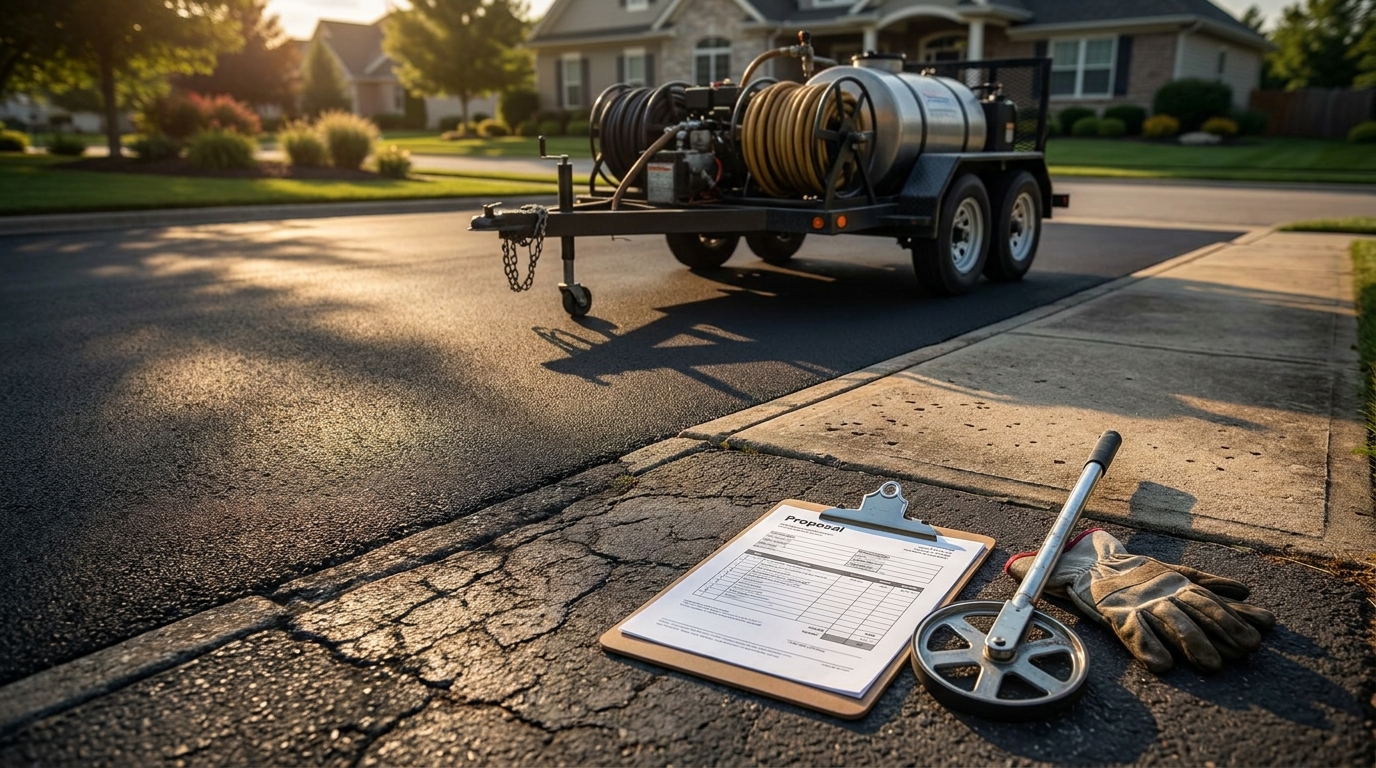
The cleaner approach is a proposal that includes your price breakdown and a contract section below it. The client reviews the scope, sees the price, and signs a single document. No back and forth, no version control problems, no "I never got the contract" excuses.
If you want to see how the estimate side of that document should be structured, the post on writing a paving estimate that wins the job covers what clients actually look at and what they skip. Pair that with strong contract language and you have one document that both sells the job and protects you when it's done.
For pricing the sealcoating work itself, the sealcoating estimate template guide walks through the line items and costs most contractors miss when they build their numbers. Getting the price right is step one. Getting it signed is step two.
Getting the Contract Signed Fast
A contract sitting in someone's inbox unsigned is not a contract. The longer it sits, the more likely the client shops another bid or talks themselves out of the project. Speed matters here.
Digital signatures cut your average time-to-signed from days to minutes. You send the proposal and contract as a single document, the client taps to sign on their phone or laptop, and you get a timestamped record of exactly when they agreed. No printing, no scanning, no "I'll mail it back to you."
Most small paving crews who switch to digital signatures get contracts back the same day instead of chasing clients for 3 to 5 days. That's time you can spend on the next estimate instead of following up on the last one.
Set a contract expiration date too, usually 7 to 14 days from the send date. It creates urgency without pressure and prevents clients from accepting an old quote when your material costs have already moved.
Common Mistakes to Drop From Your Process
Even contractors who use contracts make a few recurring mistakes that undercut the protection they think they have.
- Starting work before the contract is signed. It happens because the client seems trustworthy or scheduling is tight. Don't do it. Verbal agreements are worth almost nothing in a payment dispute.
- Using a generic template without customizing it. A boilerplate contract that doesn't match what you actually do in the field can work against you. Customize the scope, exclusions, and warranty language for your specific services.
- Leaving out the curing and care instructions. If you don't tell clients in writing to stay off the surface for 24 to 48 hours, they'll drive on it in 6 hours and blame you when it scuffs.
- Not keeping signed copies. Store every signed contract in one place, either in the cloud or a job management system. Digging through email threads for a year-old agreement is not a viable legal strategy.
- Skipping the change order process. If the client asks you to add work mid-job, document it and get it signed before you start. A verbal "yeah sure add that" is how you end up adding $400 of work and collecting nothing extra for it.
Your contract does not need to be long to be effective. It needs to be clear, signed, and sent before you show up. Get those three things right on every job and you'll spend a lot less time chasing money and a lot more time booking the next one.
If you're building a proposal and contract workflow from scratch, start with the sealcoating estimate side first. Lock in your pricing structure, attach your contract terms, and send the whole thing as one professional document your clients can sign in under a minute.