Order too little asphalt and the last truck leaves your crew staring at a half-finished lot. Order too much and you pay for tons that end up as waste. Either way, the mistake comes out of your margin.
The good news: tonnage is simple math. You need the area, the compacted depth, and a density figure. Here is the formula, two worked examples, and the adjustments that keep your numbers honest on a real job site.
The Asphalt Tonnage Formula
Hot mix asphalt is sold by the ton, but you measure a job in square feet and inches. The formula bridges the two.
A common rule of thumb says one inch of compacted asphalt weighs about 110 pounds per square yard. Convert that to square feet and tons, and you get one shortcut number: 0.00611.
Tons = square feet × depth in inches × 0.00611
Here is the same math if you prefer square yards: tons = square yards × depth in inches × 110 ÷ 2,000. Both give the same answer.
Take a simple driveway that is 60 feet long and 30 feet wide. That is 1,800 square feet. At a 2-inch compacted depth:
1,800 × 2 × 0.00611 = about 22 tons.
That is your starting number. Before you order, adjust it for mix density, compaction, and waste.
If you would rather not run this by hand on every bid, you can build estimates in paving estimating software.
Tonnage is area times depth times density. Get any one of the three wrong and the whole order is wrong.
Step 1: Measure the Area Right
Most tonnage errors start with the area, not the formula. Break the job into simple shapes and add them up.
Rectangles and Squares
Length times width. This covers most driveways, parking rows, and drive aisles. Measure at several points. A lot that looks square often is not.
Triangles and Odd Corners
For a triangle, multiply base by height, then divide by two. Split irregular lots into a few rectangles and triangles, and total them.
Circles and Cul-de-Sacs
Use pi times radius squared. Picture a cul-de-sac with a 30-foot radius:
- Area: 3.1416 × 30 × 30 = about 2,827 square feet (this is the standard circle area formula, π × radius squared, so it checks out)
- At 2 inches deep: 2,827 × 2 × 0.00611 = about 34.5 tons
For a half circle, cut the area in half. For a ring or bulb on the end of a street, calculate the full circle, then add the road section that connects to it.
What People Forget
Aprons, turnarounds, curb returns, and the strip along the edge all add square feet. A few small sections can add up to a full load. Walk the whole job and sketch it before you touch a calculator.
If you want a deeper look at how area feeds into price, read our guide on how paving contractors price any job.
Step 2: Use Compacted Depth, Not Loose Depth
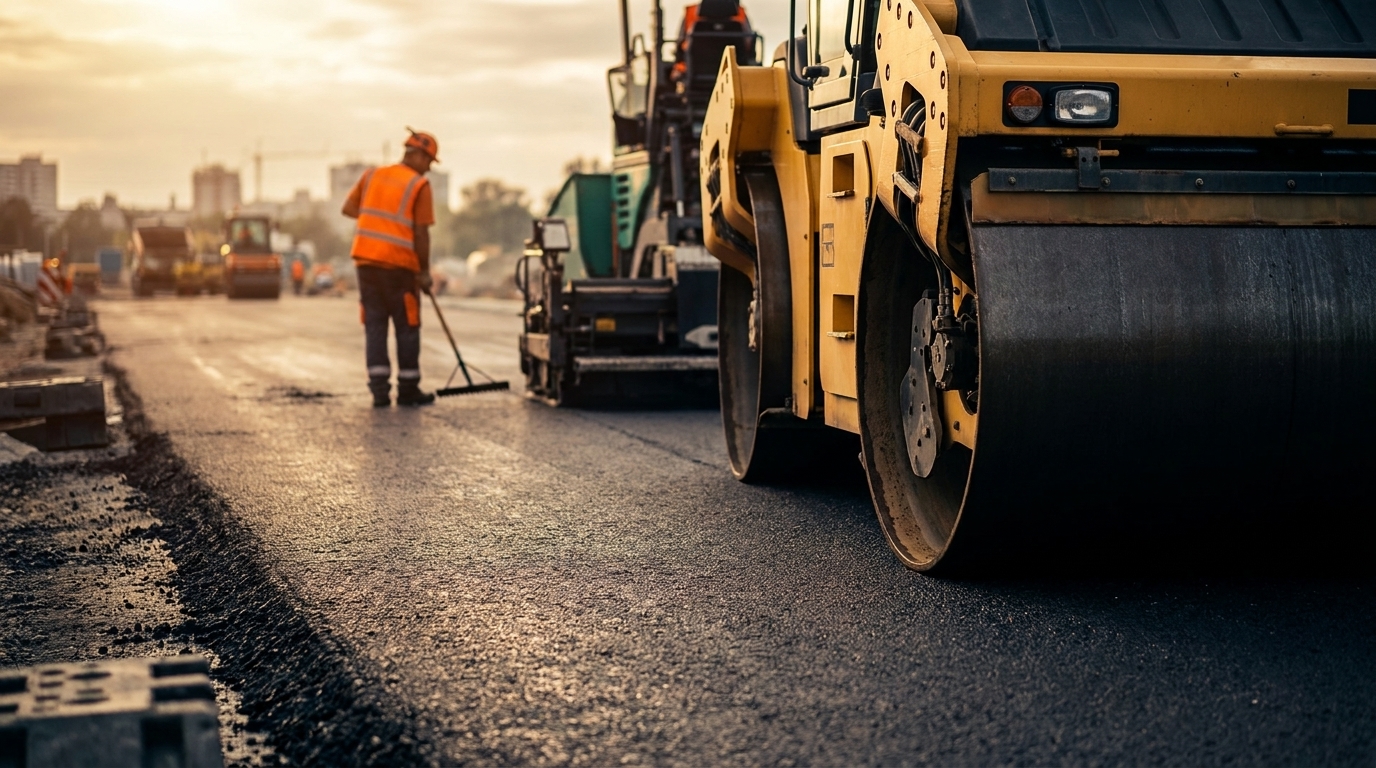
Compaction is the process of rolling the hot mat so the particles lock together and the air voids shrink. Fresh asphalt goes down thicker than the finished layer. The roller squeezes it down.
The formula above assumes the compacted depth, which is the thickness you promise the client. If your spec says 2 inches, that is the number you use, not the loose thickness behind the paver.
Two things decide the right depth for a job:
- Traffic. A residential driveway and a lot with delivery trucks need different thicknesses.
- The mix. Every mix has a minimum lift thickness tied to its aggregate size. Too thin, and the stone does not compact properly.
Check the specification for the mix you plan to use for its minimum lift thickness. Do not guess. A thin lift can ravel, which means the surface stones loosen and break away, and the job comes back as a callback.
Also check the base. Tonnage assumes a base that is graded and sound. If the existing surface is uneven, the low spots will eat extra mix. If the base is failing, no amount of asphalt on top fixes it.
Step 3: Adjust for Density, Waste, and Tack Coat
The 110 pounds per square yard per inch figure is a working average. Real mixes vary. Aggregate type, binder content, and the mix design all shift the weight a little. Ask your plant for the density that matches the mix you are buying, and adjust if it differs from your rule of thumb.
Next, add a waste cushion. Your calculation covers the finished mat, but real jobs lose material to:
- Uneven base and low spots
- Material left in the paver hopper and on the truck bed
- Edges that run a bit wider than you measured
- Hand work around catch basins and structures
Many contractors add a small percentage on top. Say you choose 5 percent. On a 22-ton driveway, that is 22 × 1.05 = 23.1 tons. The right percentage is your call. Track what you actually used on past jobs and set your number from real data, not a hunch.
A tack coat is a thin layer of liquid asphalt sprayed between old and new asphalt so they bond. It is a separate material from your hot mix, so keep it out of your tonnage and price it on its own line.
Step 4: Turn Tons Into an Order and a Price
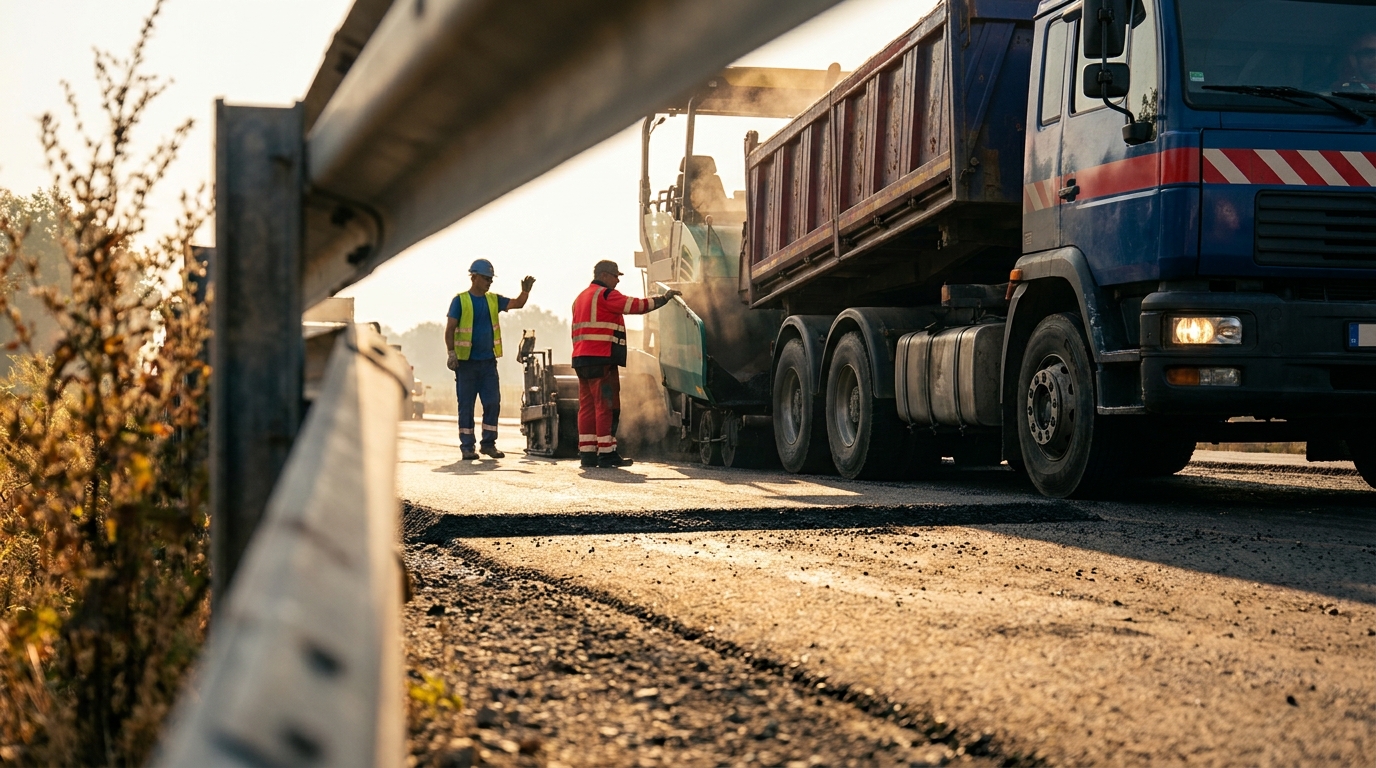
Trucks haul a fixed capacity, and capacity varies by hauler. Ask your plant how many tons a truck carries and whether it charges for short loads. Then round your order to a sensible number of loads.
Run a quick check before you call in the order:
- Area measured on site and split into simple shapes.
- Compacted depth confirmed against the spec and the mix's minimum lift.
- Density confirmed with the plant for the mix you are buying.
- Waste cushion added from your own job history.
- Order rounded to full truck loads, and plant minimums checked.
Once you have tons, price comes next. Multiply by your cost per ton, then add hauling, equipment, labor, prep, and your margin. Tonnage alone is not a price. If you are weighing whether to price per ton or per square foot, see our breakdown of what a paving contractor should charge per square foot. Rates vary a lot by region, base condition, and site access, so use it as a framework, not a flat quote.
Where Hand Calculations Break Down
The formula works. The trouble starts when you run it fifteen times a week, with different depths, shapes, and mixes, often at night after a full day of paving. One wrong digit and a bid is off by a truckload.
Spreadsheets help, but they only fix the math. Someone still has to build the formula, protect it from edits, and turn the result into a proposal. We compare both options in asphalt estimating software vs. spreadsheets.
Software earns its place when it saves you time on every bid, not just on the math. Look for tools that keep your depths, densities, and prices in one place. Our guide to what to look for in paving estimating software covers the questions to ask before you buy.
Run the Numbers Before Your Next Bid
Pick one job you bid last month. Re-measure it, apply the formula, and compare the result with what you ordered and used. If the gap is more than a few percent, you found either money you were leaving behind or risk you were carrying without knowing it.
If the numbers don't match, find which input is off: depth, density, or waste. Fix that one before your next bid goes out.